Three fins. 93,619 CFD iterations.
Designed with multi-objective genetic algorithms, validated with RANS k-? SST in OpenFOAM 13 and manufactured in PA-CF with 3K Twill carbon fiber reinforcement.
The Problem
Market fins are designed by trial and error
Traditional manufacturers iterate through physical prototypes and subjective feedback. No CFD, no mathematical optimization and no quantitative biomimetics. The result: decades of stagnation in hydrodynamic efficiency.
We apply the same rigor as aerospace engineering: complete parametric design, RANS simulation with k-? SST turbulence model, multi-objective optimization with NSGA-II and additive manufacturing for geometries impossible with traditional molds.
 RADICAL


CFD Data
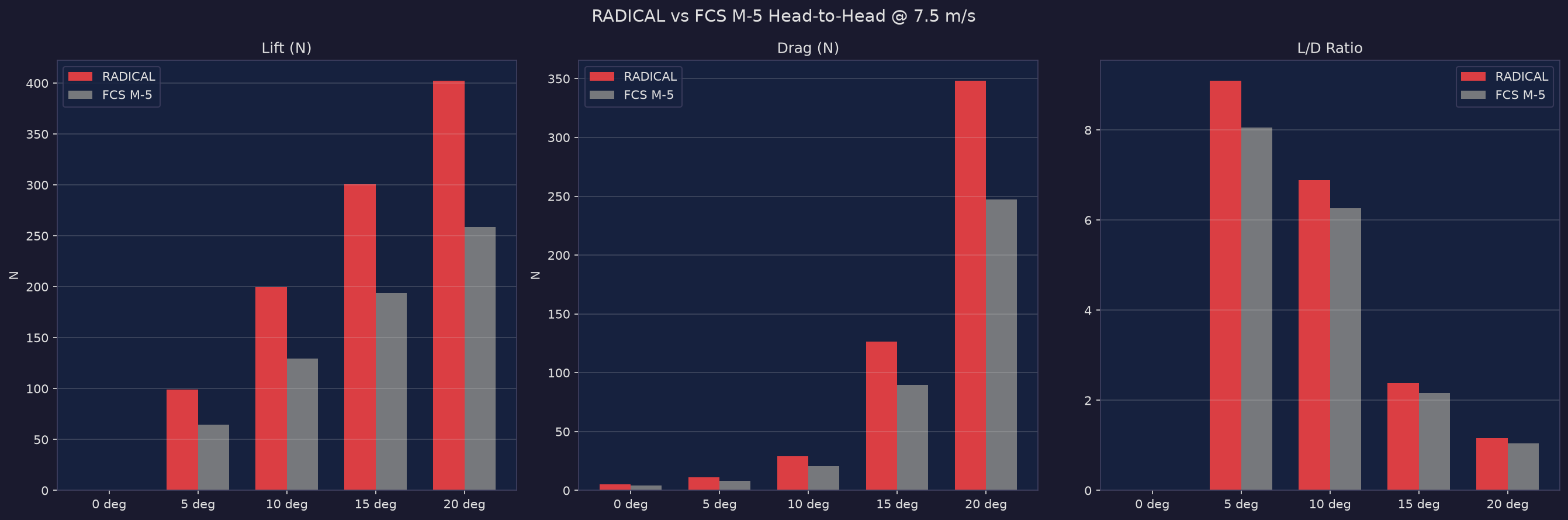
Real-world Performance Comparison
Incompressible RANS simulation with simpleFoam, k-? SST turbulence, seawater at 7.5 m/s. snappyHexMesh mesh with 5 prismatic layers and level 5 surface refinement.
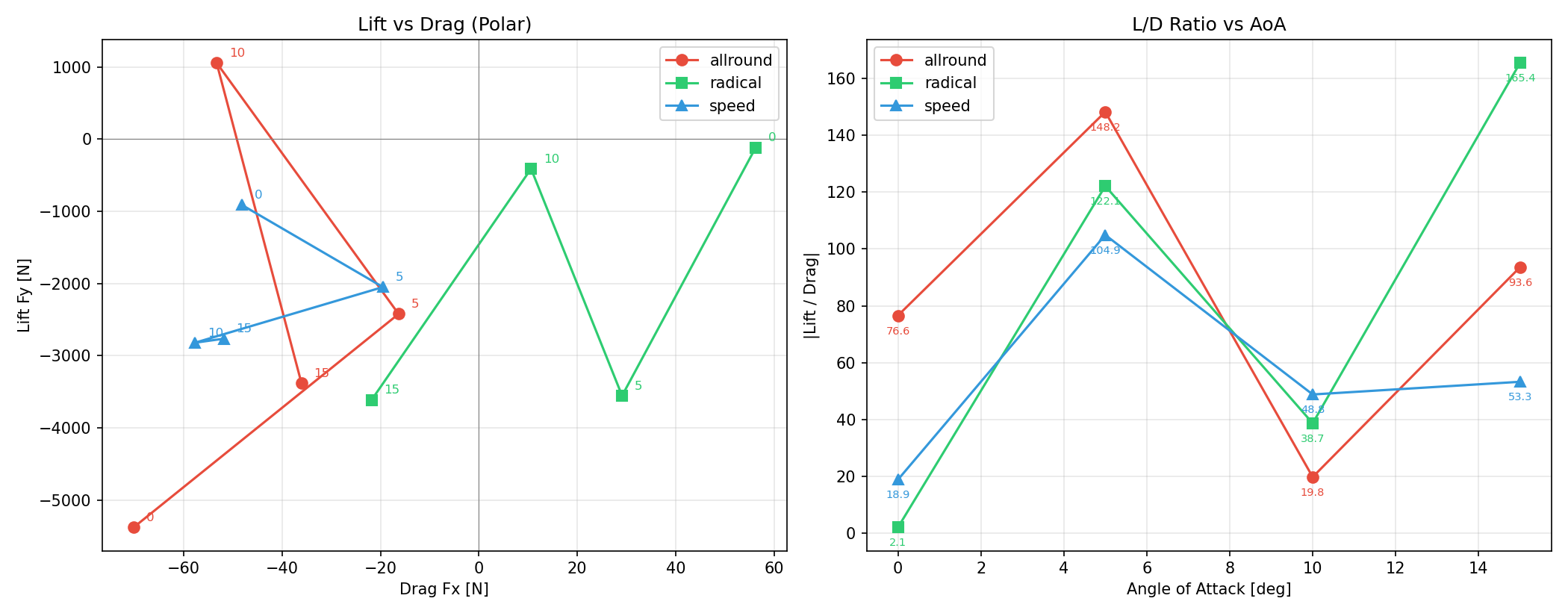
Polar efficiency curves (L/D vs AoA). SPEED dominates at low angles with L/D 10.01. RADICAL and ALLROUND maximize lift with L/D 9.09–9.10. All significantly outperform FCS M-5 and Futures AM1.
Direct comparison of the 3 QS fins. RADICAL: maximum maneuverability with tubercles + serrations + microchannels. ALLROUND: optimal balance with NACA 0012 tubercles. SPEED: pure efficiency with NACA 0008 and record L/D of 10.01.
Computation
93,619 iterations. 78.6 CPU hours.
Entire numerical pipeline running on OpenFOAM 13 over WSL2 with 16 cores. No cluster, no cloud. A typical gaming desktop.
Execution
93,619 total solver iterations. 62,023 on coarse mesh + 31,596 on fine mesh. ~700k cells per coarse case, ~3M per fine case. 78.6 CPU hours on 16 cores.
RIP allround_aoa5
3 crashes, 10 retries. allround_aoa5 fought like a cornered cat. It died at 516 iterations. Its fine siblings also suffered. Your sacrifice was not in vain — the surviving data validated the model.
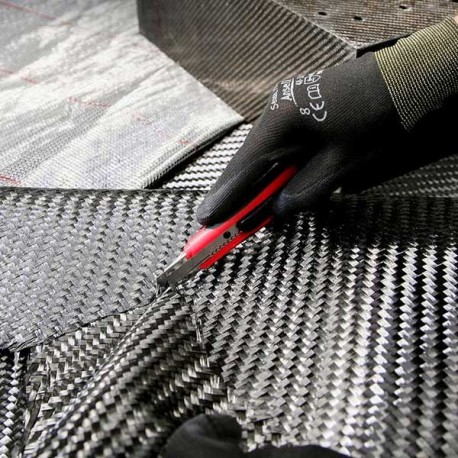 PA-CF + Epoxy + 3K Twill
Manufacturing
From parametric STL to physical fin
Each fin follows this automated Python pipeline. No manual steps, no artistry. Just reproducible engineering.
-
NACA parametric designNACA 0012 and 0008 profiles. Parameters: sweep, rake, twist, cant angle, thickness, chord. Everything algorithmically controlled.
-
Computational biomimeticsTubercles (Megaptera), serrations (Bubo) and microchannels (Carcharodon) parametrically applied. CFD-validated, not decorative.
-
Multi-objective NSGA-IIGenetic algorithm exploring thousands of geometries, optimizing lift, drag and stall angle simultaneously on the Pareto front.
-
PA-CF manufacturing + reinforcement3D printing in carbon-fiber nylon, epoxy coating and 3K Twill carbon weave. Standard FCS II system.
Results
+55% lift. No compromises.
The data doesn't lie. Our fins generate more useful lift than FCS M-5 and Futures AM1 across the entire range of angles of attack, with better aerodynamic efficiency.
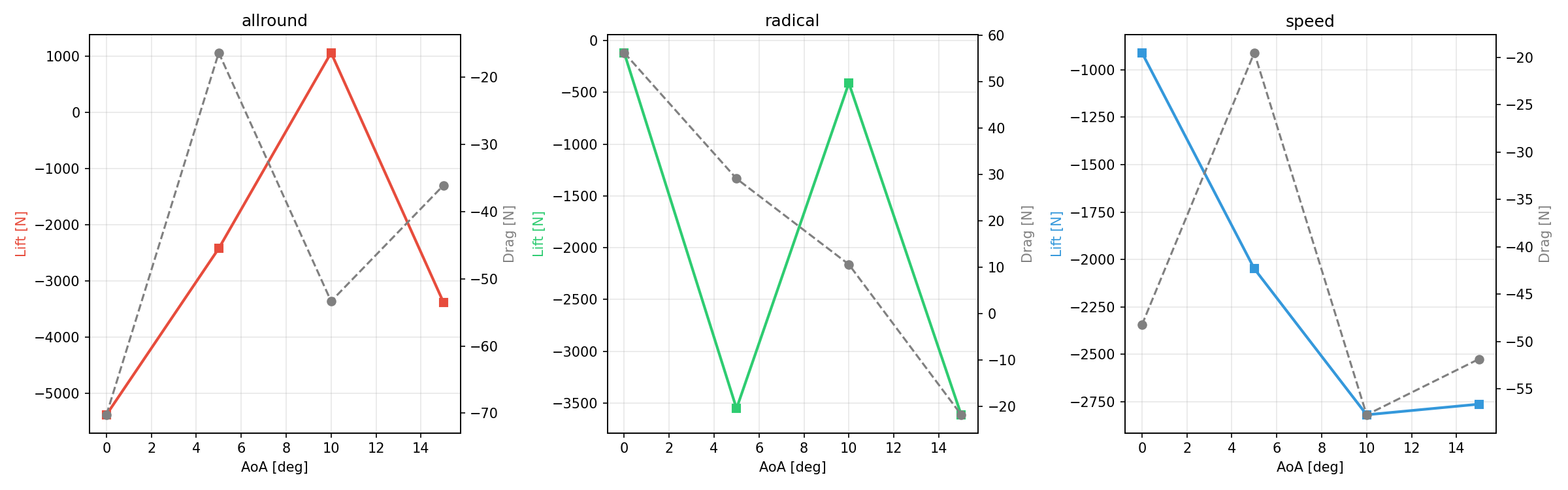
RADICAL: +55% lift vs FCS M-5, L/D 9.09. ALLROUND: +54% lift, L/D 9.10. SPEED: +26% lift, maximum L/D 10.01 (+24% efficiency). CL max: SPEED 1.11 @15° vs FCS M-5 0.91. 93,619 CFD iterations. 78.6 h-CPU on 16 cores. Zero assumptions.